
logo
NYIOP
icon-twitter icon-facebook
Opera on stage

Die Feen

Michael Tanner reports from Paris

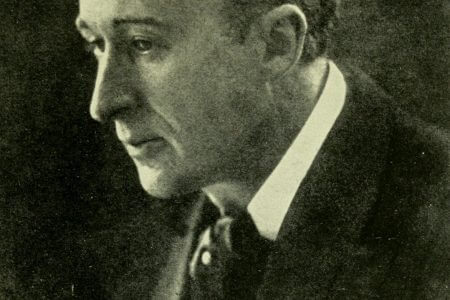
Wagner had no very high opinion of his first opera, Die Feen, in later life. He even gave the manuscript to Ludwig II for Christmas in 1865, when there was no copy in existence, and was deprecating about the opera to Cosima in 1882. After he had finished it, in 1833 (when he was 20), he naturally made strenuous efforts to get it staged; but when they failed he moved on to his next opera, and never again tried. Die Feen was first produced in Munich in 1888, five years after he died. Richard Strauss took the rehearsals, and the performances were conducted by Franz Fischer, who had been the alternate conductor of the first performances of Parsifal. It was a considerable success, despite which it has been revived only very rarely since, and then mainly in amateur productions. Yet many listeners prefer it to either of the other two pre-canonical operas. (My own preference is Das Liebesverbot, with Rienzi trailing some way behind both.)

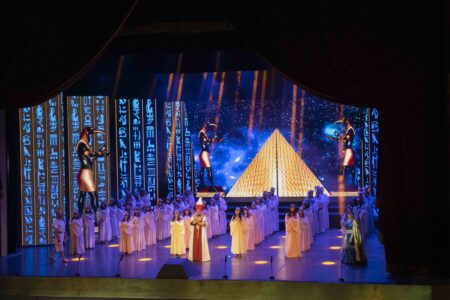
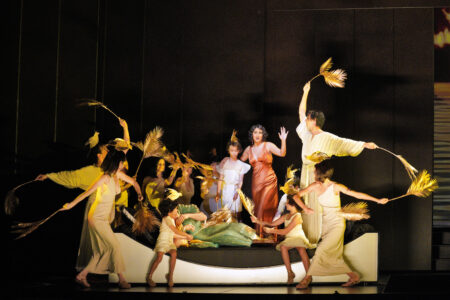
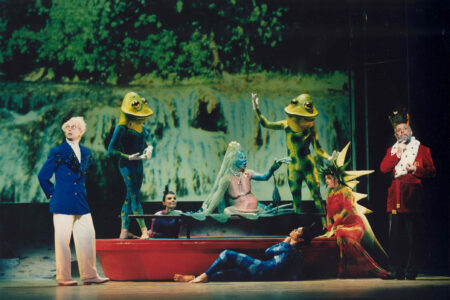
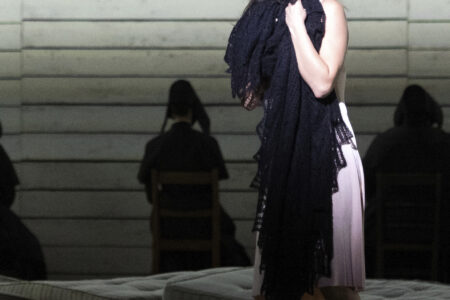
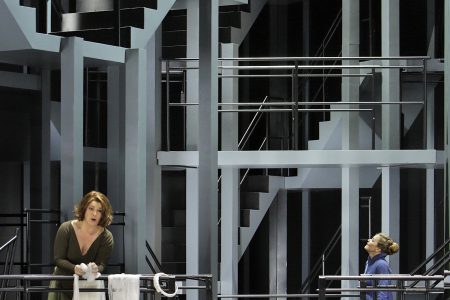
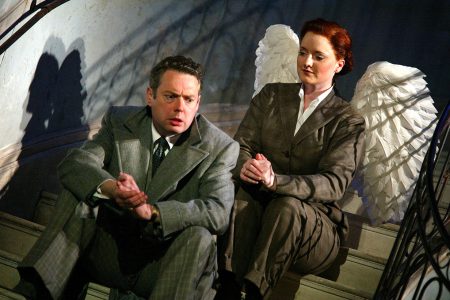
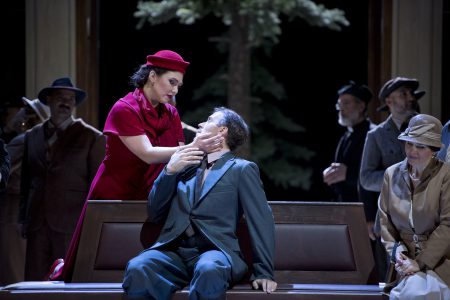
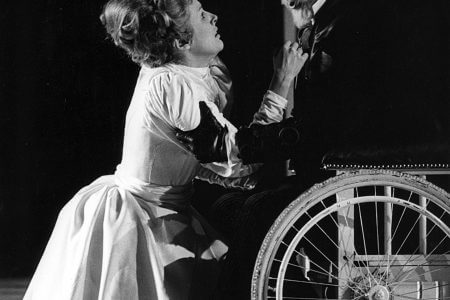
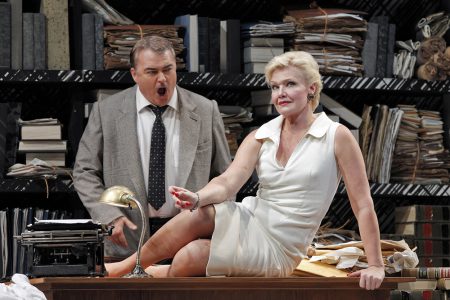
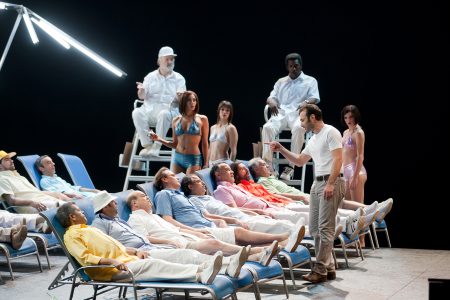
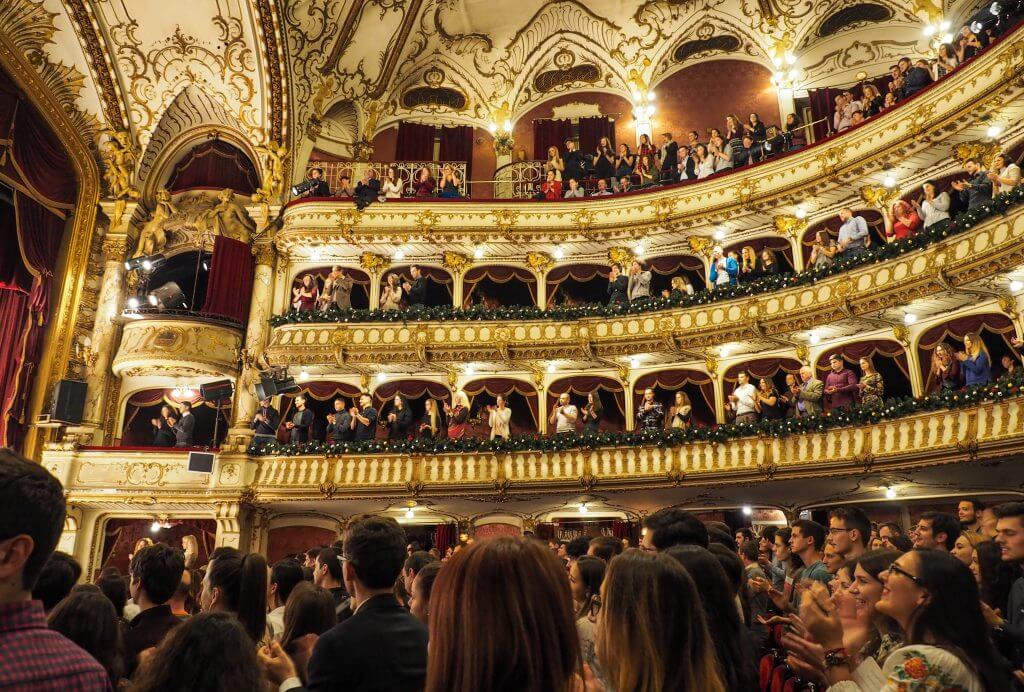
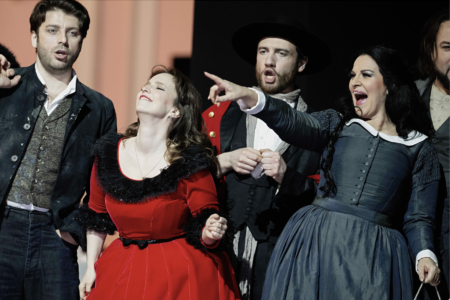
Die Feen at the ChateletThe Theatre du Châtelet’s production was decidedly an event. On the first night (March 29) the place was packed, the audience silent and attentive for four hours, and vociferous in applause when the curtain came down. Marc Minkowski, a versatile conductor, could have got a move on in Act 1, which lasted for ten minutes longer than scheduled and would have benefited from some more decisive propulsion. The other two acts were more lively. Emilio Sagi’s production was good to look at, if occasionally gaudy, even though he succumbed to one of the clichés of contemporary design, allowing Daniel Bianco to have a huge collapsed chandelier as the centrepiece for an act. Costumes were odd, many of the males wearing off-the-shoulder dresses with short skirts, which gave a campy tinge to the production; it had one or two others, but it was by no means a send-up of the piece.

Adapting Die Feen from La donna serpente by Gozzi, Wagner cottoned on to some elements that continued to appeal to him, the most obvious being the Forbidden Question. While out hunting, King Arindal pursues a doe, who turns out to be Ada, Queen of the Fairies. Arindal is allowed to marry her on condition that he doesn’t ask her provenance for the first eight years of their marriage. Having held out for most of that time, he inevitably gives way to his curiosity, and the rest is Weberian fairy-tale opera. There are quite a few sub-plots, too, involving the government of Arindal’s kingdom while he is absent, the affairs of his sister and friends, and even a comic pair.

The plot is the least easy to follow of any of Wagner’s operas, but the dramaturgy, in some places extensively altered from Gozzi, is sure. In fact, the most impressive thing about this opera is the assurance with which it is shaped, given the very large timescale Wagner permitted himself. The overture is a Weber-derived delight, with even some Mendelssohnian touches, a brave little fairy march and a characteristically robust descending dotted-rhythm tune. Thereafter the idiom continues to be that of Wagner’s favourite German operatic composers of the time, but with plenty of touches that are clearly his own.

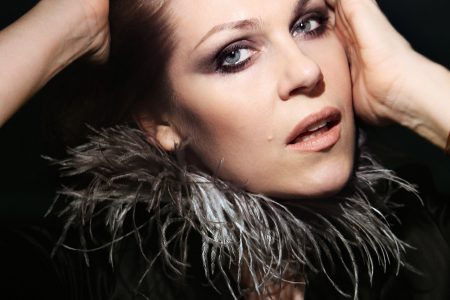
None of the Châtelet’s young cast was less than fully adequate, though only the American-Georgian soprano Lina Tetruashvili—as Lora, Arindal’s sister—struck me as someone whom I want and expect to hear again in fairly important roles. The pervasive problem was the enunciation of the text, which was almost comically abysmal, apart from the Ada of Christiane Libor, the only native German-speaker in the cast. The rest sang in a kind of operatic Esperanto which, had there been no surtitles, would have left one wholly bemused as to what they were going on about. Do surtitles remedy that situation or are they part of its cause? Once that was a major issue in opera, but now it seems that attitudes to them are either celebratory (me) or resigned (many other critics). But it would be dreadful if singers let their diction get as sloppy as it was here because of them. Otherwise—and I acknowledge that it’s a large qualification—the performance remained gripping almost throughout. Wagner’s invention seems to run a little thin towards the end, and things sort themselves out fast, which is a relief but suggests that it was one for the composer too. I hope I have a chance to see this worthwhile opera again soon.    

(c) MICHAEL TANNER

Wexford Festival 2013 advert
Opera Awards in association with OPERA Magazine